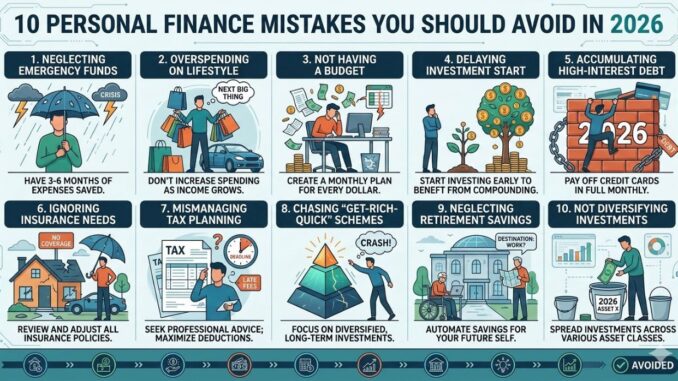
The financial world of 2026 looks vastly different from that of a decade ago. With AI-driven market volatility, the normalization of decentralized finance, and the rising cost of “green” living, the old rules of thumb are evolving. To maintain wealth and ensure long-term stability, avoiding these ten critical mistakes is essential.
1. Neglecting the “Subscription Creep” in a Post-Ownership Economy
By 2026, the “everything-as-a-service” model has matured. We don’t just subscribe to Netflix anymore; we subscribe to our cars, our coffee, our health monitoring, and even our software-enabled home appliances.
- The Mistake: Failing to audit recurring micro-payments.
- The Impact: $10 to $30 monthly charges feel insignificant, but when aggregated, they can consume 15% of a household’s disposable income.
- The Fix: Use automated AI tools to track and cancel unused “ghost” subscriptions monthly.
2. Underestimating “Greenflation”
As the world pushes toward Net Zero, the cost of carbon-heavy goods and services continues to rise. In 2026, ignoring the premium on non-sustainable products is a budgetary oversight.
- The Mistake: Not accounting for higher costs in traditional energy, meat, and non-recyclable goods.
- The Impact: Your cost of living may rise faster than standard inflation metrics (CPI) suggest.
- The Fix: Invest early in energy-efficient home upgrades and shift consumption patterns toward sustainable alternatives that will eventually be cheaper due to government subsidies.
3. Over-leveraging on “Buy Now, Pay Later” (BNPL) 2.0
BNPL has evolved from simple retail installments to covering essential services like healthcare and rent.
- The Mistake: Using BNPL for depreciating assets or daily consumables.
- The Impact: Creating a “debt ladder” where future income is entirely committed to past consumption, leaving zero room for emergency savings.
- The Fix: Limit BNPL use strictly to large, necessary purchases and ensure the total monthly installment doesn’t exceed 5% of your take-home pay.
4. Ignoring Cyber-Insurance and Digital Asset Security
In 2026, your most valuable assets might be digital—ranging from cryptocurrencies to sophisticated personal data profiles.
- The Mistake: Assuming traditional homeowners’ insurance covers digital theft or identity fraud.
- The Impact: A single sophisticated phishing attack or exchange collapse can wipe out years of savings with no legal recourse.
- The Fix: Allocate a portion of your budget to cold-storage hardware wallets and specialized cyber-liability insurance.
5. Reactive Investing in an AI-Driven Market
The stock market in 2026 is dominated by high-frequency AI trading bots that can cause massive “flash” swings based on news cycles.
- The Mistake: Trying to time the market or panic-selling during AI-induced volatility.
- The Impact: Retail investors often buy at the peak of an AI hype cycle and sell at the bottom of a correction.
- The Fix: Stick to Dollar Cost Averaging (DCA). Let the machines fight each other while you focus on long-term index-based growth.
6. The “Lifestyle Creep” of Remote Work
While remote and hybrid work saves on commuting, it has introduced new costs: larger home requirements, high-end home office tech, and increased utility bills.
- The Mistake: Spending the “saved” gas money on luxury home upgrades that don’t add real value.
- The Impact: Your baseline expenses rise to meet your new home-centric lifestyle, leaving you with no more “extra” cash than when you worked in an office.
- The Fix: Treat your commute savings as an automatic transfer to your retirement account.
7. Failing to Diversify Beyond Traditional Fiat
With the rise of Central Bank Digital Currencies (CBDCs) and various stablecoins in 2026, holding 100% of your net worth in a single local currency is increasingly risky.
- The Mistake: Having no exposure to “hard” assets or alternative currencies.
- The Impact: Vulnerability to local devaluations or banking system “haircuts.”
- The Fix: Maintain a balanced portfolio that includes physical gold, decentralized assets, and international equities.
8. Relying Solely on a Single Income Stream
The job market in 2026 is hyper-liquid. Rapid advancements in AI mean that even high-skill roles can be disrupted overnight.
- The Mistake: Assuming your “9-to-5” is permanent.
- The Impact: Job loss becomes a financial catastrophe rather than a manageable transition.
- The Fix: Build a “Side Equity” (not just a side hustle). This could be digital products, rental income, or dividend-paying stocks that cover at least 20% of your basic needs.
9. Misunderstanding the New Retirement Age
Healthcare in 2026 (longevity science) is extending productive life years, but it is also making retirement much more expensive.
- The Mistake: Planning for a 20-year retirement when you might live for 40 years post-work.
- The Impact: Running out of capital at age 85 when medical costs are at their peak.
- The Fix: Adjust your “FIRE” (Financial Independence, Retire Early) calculations to account for increased longevity and healthcare inflation.
10. Neglecting “Human Capital” Re-skilling
In the 2026 economy, your most important financial asset isn’t your bank account—it’s your brain.
- The Mistake: Stopping your education once you have a degree.
- The Impact: Skill stagnation leads to wage stagnation.
- The Fix: Budget at least 3% of your annual income for “Re-skilling.” Whether it’s AI prompts, bio-tech basics, or new management frameworks, staying relevant is the best hedge against poverty.
Conclusion
Avoiding these mistakes requires a shift from passive saving to active financial management. In 2026, the margin for error is slimmer, but the tools for success—if used correctly—are more powerful than ever.
Leave a Reply