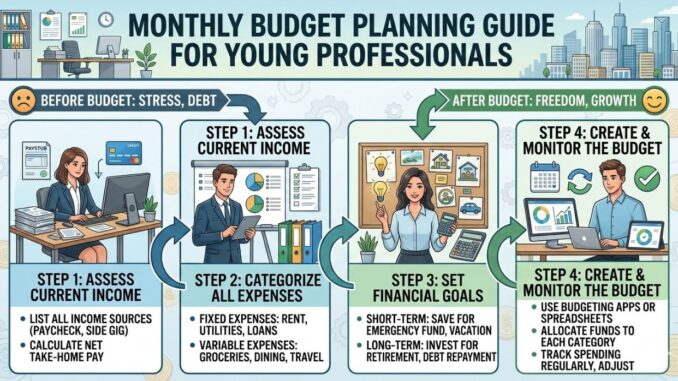
Entering the professional world is exhilarating, but that first real paycheck often comes with a realization: money disappears fast. Between rent, subscriptions, social lives, and student loans, managing finances can feel like a second full-time job.
Here is your roadmap to mastering your money.
1. The Foundation: Understanding Your “Why”
Before looking at spreadsheets, you need a mindset shift. Budgeting isn’t about restriction; it’s about alignment. It is the process of making sure your money goes toward things you actually care about.
- Short-term goals: Emergency funds, a new laptop, or a vacation.
- Long-term goals: Home ownership, retirement, or starting a business.
2. The “50/30/20” Rule
For young professionals, the simplest and most effective framework is the 50/30/20 Rule. This provides a balanced lifestyle while ensuring future security.
50% – Needs (The Essentials)
These are non-negotiable costs. If you don’t pay these, your life changes drastically.
- Rent/Mortgage and Utilities.
- Groceries (not dining out).
- Transportation (Fuel, public transit, car insurance).
- Minimum debt payments.
30% – Wants (Lifestyle Choices)
This is where your “fun” money lives. It’s important to keep this under control so it doesn’t bleed into your savings.
- Dining out and drinks with friends.
- Gym memberships and hobbies.
- Streaming services (Netflix, Spotify, etc.).
- Shopping for non-essential clothes.
20% – Financial Goals (The Future You)
This is the most critical category for building wealth early.
- Emergency Fund: Aim for 3–6 months of living expenses.
- Debt Repayment: Extra payments on high-interest credit cards or loans.
- Investments: 401(k) contributions, IRAs, or brokerage accounts.
3. Common Pitfalls to Avoid
“Lifestyle Creep”
As you get raises or bonuses, it’s tempting to upgrade your lifestyle immediately. Instead, keep your expenses the same and move that extra cash directly into your 20% savings/investment category.
- Ignoring Small Wins: Saving $50 a month might seem small, but thanks to compound interest, it is significant over 30 years.
- Not Factoring in “Sinking Funds”: Expenses like car registration or annual insurance premiums happen once a year. Divide that cost by 12 and save for it monthly so it doesn’t “surprise” you.
4. Automation: The Secret Weapon
The easiest way to stick to a budget is to remove the human element.
- Direct Deposit: Have a portion of your paycheck go directly into a savings account before you even see it.
- Auto-Pay: Set your bills to auto-pay to avoid late fees and credit score damage.
- Investment Apps: Set up recurring monthly transfers to your investment accounts.
5. Closing Thoughts
Financial freedom isn’t about how much you earn; it’s about how much you keep. By starting these habits in your 20s, you are giving your future self the gift of options—the option to travel, to take risks, or to retire early.
Your budget is a living document. Review it at the end of every month, adjust for reality, and don’t beat yourself up if you overspend occasionally. Just get back on track the next day.
Leave a Reply