For many people, the word investing sounds like something reserved for wealthy individuals or financial professionals. When I first began thinking about investing, I had the same assumption. I believed that unless someone had thousands of dollars saved, there was no real point in getting started.
But over time, I learned that this idea is simply not true.
In fact, many successful investors began with very small amounts of money. What mattered most was not the size of the initial investment, but the discipline, patience, and consistency they developed along the way.
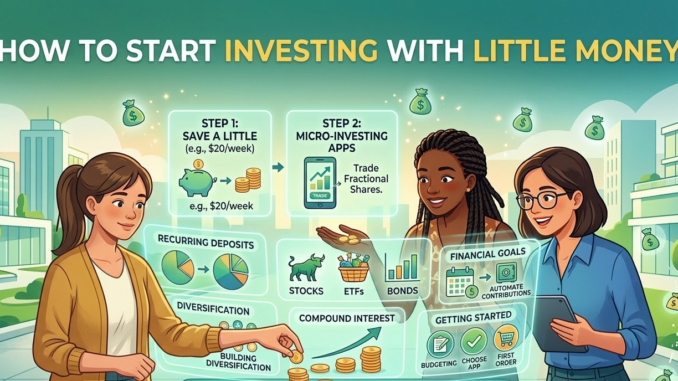
In today’s financial world, especially in 2026, investing has become more accessible than ever. Technology has lowered barriers, and many platforms now allow people to invest with only a few dollars. Fractional shares, automated investing apps, and low-cost index funds have made it possible for almost anyone to begin building wealth.
This guide is written for people who feel they don’t have enough money to start investing. It will walk through practical steps, realistic expectations, and lessons that come from personal experience and observation of how beginner investors actually grow over time.
Understanding Why Investing Matters — Even with Small Amounts
One of the most important financial lessons I learned early on is that time matters more than the amount you start with.
Many people delay investing because they believe they need to save a large amount first. Unfortunately, waiting often means missing out on the power of compound growth.
Compound growth happens when your investment earnings start generating their own earnings. Over time, this effect can become surprisingly powerful.
Even small investments can grow significantly when given enough time.
For example, consistently investing small amounts every month can gradually build a portfolio that grows larger than someone who waits many years to start.
The earlier someone begins, the more time their investments have to grow.
Changing the Mindset Around “Small Money”
One challenge beginners often face is psychological rather than financial.
It’s easy to think:
- “I only have $20 or $50. That’s not enough to matter.”
- “I’ll start investing when I have more savings.”
- “Investing is only for rich people.”
I used to think the same way. But the reality is that investing is more about habits than large starting capital.
Someone who regularly invests $25 every week may build a much stronger financial future than someone who waits for the “perfect moment” that never arrives.
Small investments teach discipline, patience, and financial awareness — all essential skills for long-term investing success.
Step 1: Build Basic Financial Stability First
Before investing even a small amount, it’s important to ensure basic financial stability.
This doesn’t mean you need perfect finances, but there are a few important steps.
Create a Small Emergency Fund
Unexpected expenses happen to everyone. Car repairs, medical bills, or sudden job changes can create financial pressure.
Having a small emergency fund helps prevent the need to sell investments during difficult moments.
Even saving a few hundred dollars can provide valuable protection.
Avoid High-Interest Debt
High-interest debt, especially credit cards, can grow faster than investment returns.
If someone is paying very high interest on debt, focusing on reducing that debt first can be a smarter financial move.
Once debt is under control, investing becomes far more effective.
Step 2: Start with Low-Cost Investment Options
One of the best decisions beginner investors can make is choosing simple, low-cost investments.
Complicated strategies are rarely necessary at the beginning.
Some of the most common beginner-friendly investment options include:
Index Funds
Index funds are designed to track the performance of a broad market index.
Instead of picking individual companies, investors gain exposure to many companies at once.
This reduces risk and simplifies the investment process.
Exchange-Traded Funds (ETFs)
ETFs are similar to index funds but trade on stock exchanges like individual stocks.
Many ETFs offer diversification across hundreds or even thousands of companies.
For beginners with small amounts of money, ETFs can be an excellent starting point.
Fractional Shares
One of the biggest changes in modern investing is the availability of fractional shares.
This means investors can buy a small portion of a stock rather than purchasing a full share.
For example, if a company’s stock costs $500 per share, someone could still invest $20 or $50 into that company through fractional ownership.
This has made investing accessible to far more people.
Step 3: Develop a Consistent Investing Habit
Consistency is far more important than large one-time investments.
A strategy many beginner investors use is investing a fixed amount on a regular schedule.
This approach is commonly known as dollar-cost averaging.
Instead of trying to predict market highs and lows, investors simply invest the same amount regularly.
Over time, this method smooths out market fluctuations and reduces emotional decision-making.
When I first started investing, setting a small automatic investment each month helped remove the temptation to constantly watch the market.
It turned investing into a routine rather than a stressful decision.
Step 4: Focus on Long-Term Growth
One mistake many beginners make is expecting quick profits.
Social media often highlights stories of people making fast money through trading or speculative investments. However, those stories rarely show the risks involved.
Long-term investing is generally more reliable.
Markets rise and fall over short periods, but historically they have shown growth over longer time frames.
By focusing on long-term goals, investors avoid unnecessary stress and emotional decisions.
Step 5: Continue Learning About Investing
Financial education is one of the most valuable investments anyone can make.
When I first started investing, I spent time reading books, listening to podcasts, and following reputable financial educators. That knowledge helped me understand market behavior and avoid common mistakes.
Even basic financial literacy can dramatically improve decision-making.
Important topics worth learning include:
- Diversification
- Risk management
- Market cycles
- Portfolio allocation
The more someone understands these concepts, the more confident they become as an investor.
Common Mistakes Beginners Should Avoid
Over the years, I’ve seen several mistakes that beginners frequently make.
Recognizing these early can prevent unnecessary losses.
Trying to Get Rich Quickly
Investing should be viewed as a long-term strategy, not a shortcut to instant wealth.
Following Social Media Hype
Online trends can push investors toward risky decisions without proper research.
Panic Selling During Market Drops
Market declines are normal. Selling investments out of fear can lock in losses.
Lack of Diversification
Putting all money into a single company or asset increases risk significantly.
Diversification spreads risk and improves portfolio stability.
The Advantage of Starting Small
Starting with small investments has unexpected advantages.
Beginners learn how markets behave without risking large amounts of money. They gain experience managing emotions during market fluctuations and gradually build confidence.
Some of the most experienced investors today began with very small portfolios.
Over time, consistent contributions and patience allowed those portfolios to grow far beyond their initial size.
Final Thoughts
Investing with little money may feel slow at first, but it is still progress.
The biggest obstacle for most people is not lack of money — it’s hesitation.
Waiting for the perfect financial situation often delays the start of a journey that could have begun much earlier.
Small investments today can lead to significant opportunities tomorrow. More importantly, starting early builds the habits and financial awareness necessary for long-term success.
In my experience, the most successful investors are not always the ones with the most money at the beginning. They are the ones who stay consistent, remain patient, and continue learning along the way.
Conclusion
Starting to invest with little money is not only possible — it’s increasingly common in today’s financial environment.
With modern investment platforms, fractional shares, and low-cost funds, beginners can enter the investment world with only small amounts of capital.
What truly matters is developing the right mindset: consistency, patience, and long-term thinking.
Over time, small investments combined with compound growth can lead to meaningful financial progress.
Every investor’s journey begins with a first step. Even if that step is small, it can lead to significant change in the future
Leave a Reply