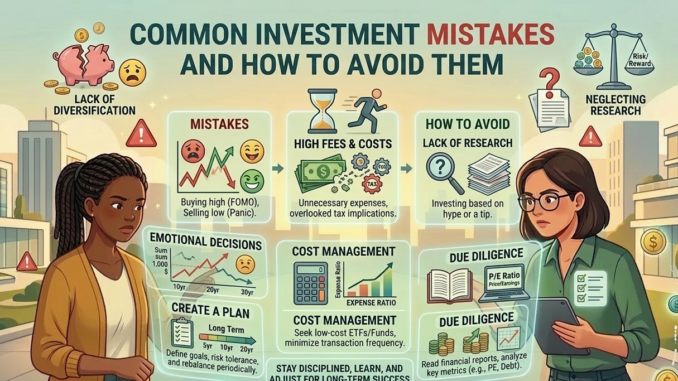
Investing is often described as one of the most effective ways to build long-term wealth. However, for many people entering the world of finance for the first time, investing can feel confusing, unpredictable, and sometimes intimidating. While there are many opportunities in financial markets, there are also risks—especially for those who are just beginning their journey.
When I first started learning about investing several years ago, I made a number of mistakes that, in hindsight, were very common among beginners. I followed market trends too closely, reacted emotionally to price fluctuations, and sometimes made decisions based on incomplete information. These experiences, although frustrating at the time, eventually taught me some of the most valuable lessons about how investing really works.
One important realization I came to understand is that successful investing is not about avoiding mistakes entirely, but about learning from them and building better habits over time. Even experienced investors occasionally make poor decisions, but the difference is that they recognize these errors and adjust their strategies accordingly.
This article explores some of the most common investment mistakes people make and offers practical guidance on how to avoid them. The goal is not to provide complex financial theories but rather to share realistic insights that can help investors approach the market with greater awareness and confidence.
Mistake 1: Investing Without a Clear Plan
One of the most frequent mistakes beginners make is entering the market without a clear investment strategy.
Many new investors buy stocks simply because they hear about them from friends, online forums, or trending news stories. Without a defined plan, investment decisions often become reactive rather than intentional.
When I first started investing, I occasionally bought shares based purely on excitement about a company or a headline I read online. At the time, it felt like I was making smart moves. However, without a clear long-term strategy, those decisions lacked consistency.
How to Avoid This Mistake
Before investing money, it is important to define your goals. Ask yourself questions such as:
- Am I investing for retirement?
- Do I want long-term wealth growth?
- What level of risk am I comfortable with?
A clear plan helps guide investment decisions and reduces the likelihood of impulsive behavior.
Mistake 2: Trying to Time the Market
Another common mistake is attempting to predict exactly when the market will rise or fall.
Many investors believe they can buy stocks at the lowest possible price and sell them at the highest peak. While this idea sounds appealing, the reality is that consistently timing the market is extremely difficult—even for professional investors.
Early in my investing journey, I tried to wait for the “perfect moment” to buy certain stocks. Sometimes the market moved upward while I was waiting, and I missed the opportunity entirely.
How to Avoid This Mistake
Instead of focusing on short-term predictions, many investors use strategies that emphasize consistency, such as investing regularly over time. This approach reduces the pressure of trying to predict market movements and allows investments to grow gradually.
Long-term investors often benefit more from time in the market rather than trying to perfectly time their entry and exit points.
Mistake 3: Letting Emotions Control Investment Decisions
Emotional decision-making is one of the most powerful forces in financial markets.
When markets rise quickly, investors may feel excitement or even overconfidence. When markets decline, fear and anxiety can cause investors to sell prematurely.
I remember watching the market drop sharply during one of my early years as an investor. Seeing my portfolio value fall day after day created a strong urge to sell everything and avoid further losses. Looking back, that emotional reaction would have been a mistake.
Markets eventually recovered, and the experience taught me how important emotional discipline can be.
How to Avoid This Mistake
Successful investors focus on long-term goals rather than daily market fluctuations.
Maintaining a diversified portfolio and having a clear investment plan can help reduce emotional reactions during volatile market periods.
Mistake 4: Failing to Diversify Investments
Another frequent mistake is concentrating too much money in a single investment.
Some beginners invest heavily in one company or one sector because they believe it has strong growth potential. While this approach may occasionally produce large gains, it also significantly increases risk.
I once invested too heavily in a single technology company that was receiving a lot of attention at the time. When the stock experienced a sudden decline, my portfolio suffered far more than it would have if my investments had been spread across multiple companies.
How to Avoid This Mistake
Diversification is a key principle of risk management.
A diversified portfolio may include investments in different industries, asset classes, and geographic markets. This helps reduce the impact of poor performance in any single investment.
Mistake 5: Ignoring Investment Fees and Costs
Many beginners focus only on potential returns without paying attention to investment costs.
However, fees—such as management expenses, trading commissions, and fund costs—can reduce overall investment returns over time.
Even small percentage fees can accumulate significantly over many years.
How to Avoid This Mistake
Before investing in funds or financial products, take time to understand the associated fees.
Low-cost investment options are often preferred by long-term investors because they allow more of the investment returns to remain in the portfolio.
Mistake 6: Following Trends Without Research
Financial markets often experience waves of popularity around certain investments. Social media, news headlines, and online discussions can quickly turn specific stocks or assets into trending topics.
However, following trends without conducting proper research can lead to poor investment decisions.
I’ve seen many investors buy assets simply because they were being widely discussed online, only to regret the decision later when prices declined.
How to Avoid This Mistake
Before investing in any asset, take time to understand the underlying business or investment structure.
Ask questions such as:
- What does the company actually do?
- How does it generate revenue?
- What are the risks involved?
Making informed decisions based on research is far more reliable than reacting to market hype.
Mistake 7: Expecting Quick Profits
One of the biggest misconceptions about investing is the idea that it produces rapid wealth.
While some investors experience short-term success, long-term wealth is usually built gradually.
Many beginners become discouraged when their investments do not produce immediate gains. As a result, they may abandon their strategy too early.
How to Avoid This Mistake
Investing should be viewed as a long-term process.
Markets naturally experience cycles of growth and decline. Investors who maintain patience and stay focused on long-term goals are often better positioned to benefit from market growth over time.
Mistake 8: Not Continuing Financial Education
Financial markets evolve constantly. New technologies, economic trends, and investment tools continue to shape how markets operate.
Some investors stop learning after making their first investments, which can limit their ability to adapt.
Personally, I’ve found that continuously learning about finance has made investing far more manageable and less stressful.
How to Avoid This Mistake
Develop a habit of expanding your financial knowledge.
Reading books, following reputable financial publications, and learning from experienced investors can gradually improve your understanding of markets.
Even small improvements in financial literacy can lead to better investment decisions.
Final Thoughts
Investing is a journey filled with opportunities to learn and grow. Mistakes are not only common—they are often an important part of developing experience as an investor.
The key is not to eliminate every possible error but to recognize patterns that lead to poor decisions and build strategies that reduce those risks.
Reflecting on my own experiences, many of the most valuable lessons came from moments when things did not go exactly as planned. Those situations forced me to reassess my approach and develop a more disciplined mindset.
Over time, investing becomes less about reacting to market movements and more about maintaining consistent habits and long-term perspectives.
Conclusion
Investment mistakes are a natural part of the learning process for both beginners and experienced investors. By understanding the most common errors—such as emotional decision-making, lack of diversification, and unrealistic expectations—investors can significantly improve their financial outcomes.
Successful investing is not defined by perfect predictions or flawless timing. Instead, it is shaped by thoughtful planning, continuous learning, and patience.
By approaching the market with discipline and awareness, investors can gradually build stronger portfolios and move closer to their long-term financial goals.
For anyone starting their investing journey, recognizing and avoiding common mistakes may be one of the most valuable steps toward achieving lasting financial success.
Leave a Reply