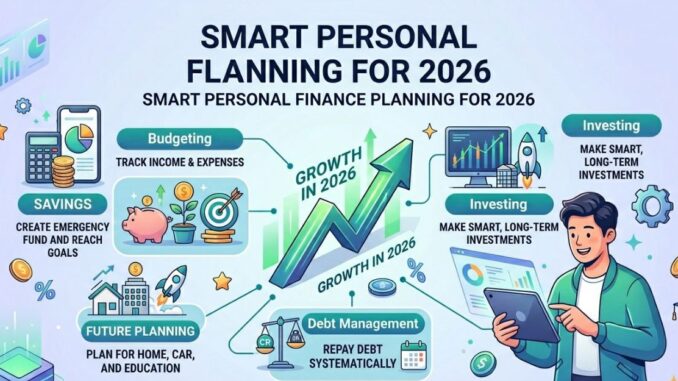

As we enter 2026, personal finance management has become more important and more complex than ever before. Economic uncertainty, rapid technological change, inflation, and shifting employment trends are shaping the way individuals earn, spend, save, and invest money. Smart personal finance planning is no longer optional—it is essential for financial stability and long-term success. In today’s digital world, financial decisions happen quickly, often with just a tap on a smartphone. Without a clear strategy, it is easy to overspend, under-save, or make poor investment choices. A smart financial plan provides structure, direction, and protection against unexpected challenges. It helps individuals balance present needs with future goals while maintaining flexibility in a constantly changing economic environment.
The first step in smart financial planning is defining clear and meaningful financial goals. Without goals, money tends to be spent without purpose, leaving little progress toward long-term security. In 2026, individuals should identify short-term, mid-term, and long-term objectives. Short-term goals may include building an emergency fund or paying off credit card debt. Mid-term goals might involve purchasing a home, funding higher education, or starting a business. Long-term goals typically focus on retirement and financial independence. Writing down goals and attaching timelines to them increases accountability and motivation. When financial decisions align with clearly defined goals, it becomes easier to prioritize spending and stay disciplined. Clarity transforms financial planning from a vague idea into a practical action plan.
Budgeting remains the foundation of financial health, even in a highly digital economy. However, modern budgeting goes beyond simply tracking expenses. It requires understanding cash flow—knowing exactly how much money comes in and how much goes out each month. With the rise of online subscriptions, digital wallets, and automated payments, small recurring expenses can accumulate quickly. Reviewing financial statements regularly helps identify unnecessary spending and opportunities to save more. Many people follow structured budgeting methods, such as allocating a fixed percentage of income to essentials, lifestyle choices, and savings. While no single formula works for everyone, the key principle is consistency. A well-managed budget ensures that essential expenses are covered while leaving room for saving and investing.
Financial resilience is another critical component of smart planning in 2026. Unexpected events such as medical emergencies, job loss, or economic downturns can disrupt even well-structured plans. Building an emergency fund that covers at least three to six months of essential living expenses provides a safety net during difficult times. This fund should be easily accessible but separate from daily spending accounts. In addition to savings, insurance coverage plays a major role in risk management. Health, life, disability, and property insurance protect individuals and families from significant financial setbacks. Although insurance premiums may feel like an added cost, they serve as protection against potentially devastating losses. Strong financial security depends not only on growth but also on protection.
Investing wisely is essential for long-term wealth creation. Simply saving money in a traditional account may not be enough to keep pace with inflation. In 2026, individuals have access to a wide range of investment options, including stocks, bonds, mutual funds, exchange-traded funds, and digital assets. Diversification remains one of the most effective strategies for managing risk. By spreading investments across different asset classes and industries, individuals reduce the impact of market volatility. Long-term investing requires patience and emotional discipline. Market fluctuations are normal, but reacting impulsively to short-term changes often leads to poor results. A consistent investment plan, supported by regular contributions and periodic reviews, increases the likelihood of sustainable financial growth over time.
Debt management is equally important in building financial stability. While some forms of debt can support wealth creation—such as loans used for education, business, or property—high-interest consumer debt can quickly become a burden. Credit cards and short-term loans often carry high interest rates that compound rapidly if balances are not paid off. Smart financial planning prioritizes eliminating high-interest debt as quickly as possible. Strategies such as focusing on the highest interest rate first or paying off smaller balances for psychological motivation can be effective. Understanding credit scores and maintaining responsible borrowing habits also improves financial flexibility. When managed properly, debt can be a useful financial tool; when mismanaged, it becomes a serious obstacle.
Planning for retirement and long-term financial independence requires early and consistent effort. Increasing life expectancy means that retirement could last several decades, requiring substantial financial resources. Relying solely on government support or employer pensions may not be sufficient. Contributing regularly to retirement savings accounts or long-term investment portfolios allows individuals to benefit from compound growth over time. Even small contributions, when made consistently, can grow significantly over many years. Estate planning is another important aspect of long-term preparation. Creating a will and designating beneficiaries ensures that assets are distributed according to personal wishes. Long-term financial planning is about building stability not only for oneself but also for future generations.
Finally, technology and financial education play powerful roles in personal finance success in 2026. Digital tools, budgeting apps, automated savings systems, and robo-advisors make managing money more convenient and efficient. However, technology alone cannot guarantee good decisions. Continuous financial education is essential for understanding economic trends, investment principles, and risk management strategies. Reading financial books, following credible news sources, and participating in educational programs can strengthen financial literacy. Smart personal finance planning is a lifelong process that evolves with changing circumstances. By setting clear goals, maintaining disciplined budgeting habits, investing strategically, managing debt responsibly, protecting against risks, and embracing ongoing learning, individuals can navigate 2026 with confidence and build a secure financial future.
Leave a Reply